


Political differences are a common, even if uncomfortable, fact of life—especially between United Methodist clergy and their congregations.1
In our 2025 Statewide Clergy Health Survey, 68% of North Carolina United Methodist Church (UMC) clergy reported that they thought their political views were different from those held by the majority of their congregants, with 64% estimating that they were more liberal and 4% more conservative. That’s a lot of potential stress on these faith leaders, particularly in an era where the word “political” has come to mean “partisan,” and partisan identities are now stronger than religious ones.2 Yet, our research also identified a secret sauce that may mitigate the strain sometimes caused by these political differences: the feeling amongst clergy that their differences were accepted by their congregants.
Acceptance sounds nice, of course.
But how do you actually cultivate it?
The good news is acceptance is not just a posture but a practice—which is why we created an easy-to-use conversation guide to help United Methodist clergy and congregational leaders come together around difficult topics during these tense times. It’s called Keeping the Faith: Conversations to Strengthen the Bond Between Pastors and Church Leaders (now updated with 2025 data), and over the next six weeks, we’ll be sharing an excerpt from each of the guide’s six conversations in this newsletter. While the conversations center our data on pastoral well-being, they are designed to help both clergy and congregational leaders move from unhealthy peacekeeping or outright hostility to a healthier Christ-like hospitality.

In Romans 15:7 (NIV), the Apostle Paul instructs the early Christ-followers to “accept one another, then, just as Christ accepted you, in order to bring praise to God.”
In other versions, however, the Greek phrase for “accept” is translated as “receive” or “welcome.” In other words, to accept one another does not mean passively tolerating each other or even agreeing with someone else's viewpoint; instead, it means to offer those we're in community with the same sense of belonging God offers us.3 It's to say, “Even though we disagree, I see you as another human being—fragile and flawed and still a reflection of God.”
Of course, a spiritual sense of belonging doesn’t erase the challenges of day-to-day belonging. An overwhelming 91% of clergy we surveyed report that political tensions are difficult at least “some of the time.” Clergy who say that political differences are more difficult to endure report higher levels of anxiety, higher emotional exhaustion, and higher detachment from colleagues and congregants. They also tend to report a lower sense of personal accomplishment. In contrast, clergy who say their congregants are more accepting of their political differences tend to report better well-being: lower anxiety, lower emotional exhaustion, lower detachment, and a higher sense of personal accomplishment. It’s another powerful example of how the health of a congregation can contribute to the health of its pastor.
Healthy clergy and congregations are inherently political in as much as politics is about how communities organize themselves so that all are flourishing.
Truly, when pastors and church leaders are fulfilling their callings well, the community will feel a little uncomfortable by the gospel’s politics and will feel compelled to wrestle over its different implications for life together.4 To remove the discomfort of this wrestling is to remove the possibility of transformation and what it means to be a part of a church in which one’s true identity transcends partisan belonging and rests squarely in the love of God.
This is an extraordinary calling.
This is also the ordinary work.
Over the next six weeks, our Keeping the Faith conversation series will help you turn the secret sauce of accepting, receiving, and welcoming one another’s differences into a recognizable skill that clergy and congregational leaders alike can practice together. It’s this kind of “healthy heat,” as author and conflict facilitator Priya Parker calls it, that can help us stay in relationship with those we love—and those we're trying to.
Your Serve Well Resource
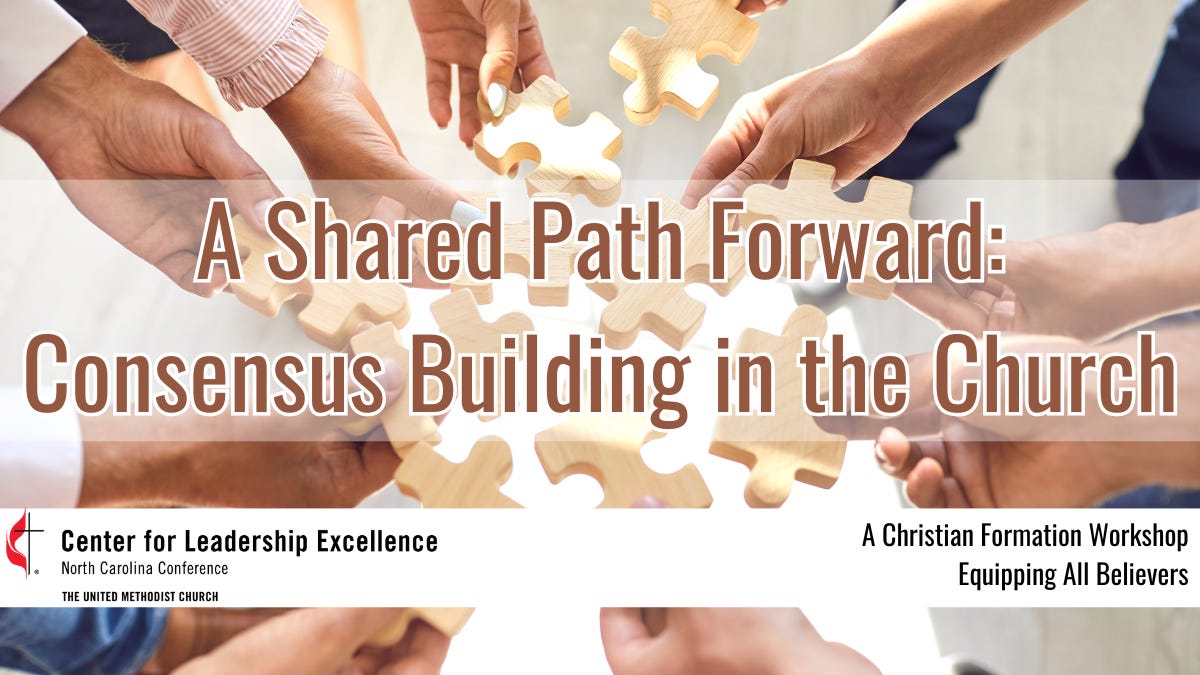
A Shared Path Forward: Consensus Building in the Church. Center for Leadership Excellence Webinar. September 30, 12-1:30 p.m. ET
The words “majority rules” evoke a polarized approach to decision-making. What if we imagine working toward a decision that everyone can support? What if church leaders lean in to understand differences, so that alignment and common goals and needs can be identified? Join the Center for Leadership Excellence, a ministry of the North Carolina Conference of the United Methodist Church, for an online workshop to learn strategies for developing consensus in your ministries!
For more upcoming events and additional resources from our trusted collaborators, visit our Resource Hub for Fostering Unity in Diverse Congregations.
According to the National Survey of Religious Leaders (NSRL), the extent to which clergy are politically aligned with those in the pews varies substantially across religious groups. However, the mismatch between mainline Protestant clergy and their congregations is particularly striking, revealing a potential occupational stress unique to them.
A study published in the journal of European Journal of Political Research in 2017 found that, among 4,000 respondents from Belgium, Spain, the United Kingdom and the United States, one's connection to their political party was stronger than their connection to their race, ethnicity, or religion—making political division and hostility in our communities even more likely.
To offer belonging to our fellow human beings does not mean we have to remain in community with particular human beings who are causing us harm. We can acknowledge someone else’s humanity while still also protecting ours. As Jesus advised, “If anyone will not welcome you or listen to your words, leave that home or town and shake the dust off your feet” (Matthew 12:14, NIV).
UMC clergy and congregants are called to live into their baptismal vow to “resist evil, injustice, and oppression in whatever forms they present themselves.” This means pastors and congregants are supposed to talk about the death-dealing organization of power in both Jesus’s time and our own. It’s impossible to do this work without politics!